Joe Quesada Speaks
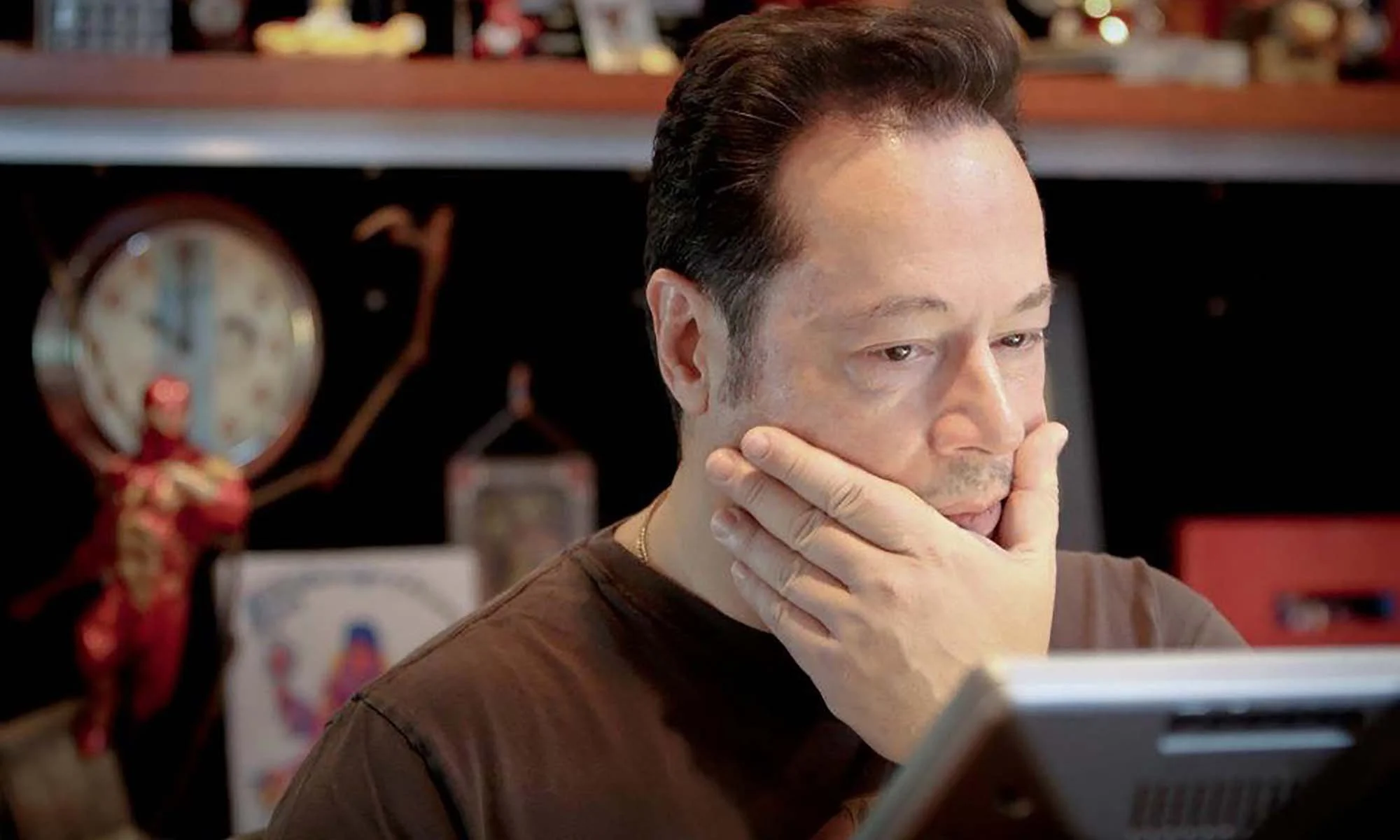
Image credit: Joe Quesada
Interview By Alex Hamby • HeroRealm.com • September 2000
Hero Realm: It sounds like you're busy there.
Joe Quesada: It's insane over here.
HR: Let's start a bit in the past. I know you hate to go back too far. So, I'm not going to ask you how you got into the business.
JQ: Oh please.
HR: What I want to ask about is Ash.
JQ: Sure.
HR: What's going to happen with him now that you are Editor in Chief at Marvel?
JQ: Pretty much the same thing that's been happening with him. Which is really not much. Since Event Comics became Marvel Knights, the production on Ash actually had to stop because, at the end of the day, Marvel Knights was what was paying the rent.
The independent market is very tough and very volatile place. We have a few issues that are waiting to be published but there is really no sense because they are only part of a story arc. There are a couple issues that we can sort of take advantage of later on.HR: You are thinking that someday in the future...
JQ: No. It's not dead. Absolutely not. You know, it's not the right time.
HR: Let's move onto Marvel then.
JQ: Ok.
HR: How different is it being Editor in Chief as opposed to anything else you've done in the industry previous.
JQ: It's really quite a daunting task. Somebody asked me once, the other day, 'am I scared?' No, I'm not scared really. I'm just kind of overwhelmed because I read Marvel Comics as a very young child and I dropped them. I didn't actually get back to them until my late 20's. So, I don't quite have the reverence that a lot of people have toward this place. I am very respectful of the characters and I love the stuff that goes on here. Really, I have reverence for Stan Lee. There is just a big chunk of Marvel History, like that whole 70's period that I wasn't really attached to. So, when I take this job it is overwhelming because it's like, wow, there's so much stuff to do and so much stuff to straighten out. That's really the only difference. It's pretty much the same feeling I had when we were doing Marvel Knights — only it's bigger.
HR: How long will your contract keep you at Marvel?
JQ: You know, we're just going to take it a day at a time.
HR: Hopefully it will be a long run.
JQ: Well, we'll see.
HR: As Editor in Chief, how much control are you being given over the titles and the company?
JQ: With respects to editorial, I'm pretty much given as much power as I really want to use. The truth of the matter is that I really just want to give that power back to the editors and the creators. With regards to the company, there is a publishing board here, which consists of Bill Jemas, Frank Frachetta and myself. We create a sort of three-headed beast that sits down once a week and says, "Where are we going wrong, where are we going right? What's licensing doing that we can take advantage of in the comics? Is there any sort of animation down the road? Any online stuff that we can cross-pollinate with editorial?" Which is really something that hasn't happened here for a very long time. All separate entities of this company used to operate in separate venues and never the two really met — ever.
HR: How is that relationship? Usually people are very apprehensive about, what they call "the suits".
JQ: Well, let me put it to you this way. When Bill Jemas came in here, he's the president of publishing; he essentially took this crazy tree and shook it upside down to see what fell out. The Ultimate program came out of that and my promotion to EIC from Marvel Knights came out of that. Bill's actually a very creative guy; I wouldn't categorize him as a "suit". Although people could look at my position and say, "Now you're a suit." I'm not; I come to work in a sweatshirt and shorts. You might perceive him that way but it's really not. He's very very creative. The best I can say is that they are creative strategy meetings.
HR: That sounds positive. When you it comes to the editors, how are you going to be working toward getting continuity back? There have been a lot of issues with that over the past decade or so.
JQ: I realize that. Obviously the first thing is to make the stories readable and to make them accessible. Also, to try to break the shackles of comic book rhetoric and continuity, with regards to, "You can't do that because that can't happen in the Marvel Universe. It happened this other way before." No body cares, realistically. The real world doesn't care. The real world would want great stories. Again, going back to the Ultimates and Marvel Knights, hardcore Marvel fans read the Ultimate book — or even before the Ultimate book, the first thought was "how does that play in the Marvel Universe? Is that a separate universe? What is it?" The idea is when you pick up the book and you read it, it's a great read and when you're done reading it you don't care where it took place. You're just happy you got a good Spider-Man story. That is some of the different avenues we are taking in order to improve the readability and bring some fans back to these books.
HR: Just to go a little bit further—When it comes to continuity, there was a big thing with Mysterio's death in Daredevil and then coming back to life.
JQ: Right.
HR: Are things like that going to stop?
JQ: Lord I really hope so! Nobody was more upset about that than me, you have to understand. Technically it never should have happened because, with respect to Kevin Smith, that was essentially a slap in the face of that story. We killed him off in one book and Mysterio shows up, literally, that week in another Spider-Man book, "I'm back!" That's like saying, "Here's these eight wonderful Kevin Smith stories and they really just don't count because he's really not dead." So, yeah we have to be very careful about stuff like that. I can tell you; I think right now, the books are much better than they used to be with regards to that sort of issue.
HR: About Marvel Knights. Who's going to be taking over your position as Editor on those titles?
JQ: I can't tell you yet. We'll announce that in a couple weeks.
HR: So, you are already looking at somebody?
JQ: No, we pretty much have somebody now.
HR: Are you still planning on going back to Daredevil?
JQ: I will be doing special projects because I won't be able to pencil as much as I'd like to. So, yes it will be Daredevil because that is a character that is very near and dear to my heart.
HR: Onto other things then. How much change are you planning and how fast can fans expect to see that change take effect?
JQ: Look, I keep repeating this; there is no magic bullet for Marvel, for any company. You will see us start to take small steps, some things that might be big steps. Change has already happened in this last week — it's just not public.
HR: Right, it takes a few months for things to get out there.
JQ: So, I think fans will start to see things happen three-four months down the road. Six months down the road take a look at Marvel and see how we're doing. I think the Ultimate project is a huge step for Marvel, even though it's technically a baby step in publishing. When you look at that book, you feel the paper, you see the artwork and read the story — it's something that you thought Marvel wasn't capable of doing. We're getting the same reaction to that book that we got with Marvel Knights' books when they first came out. It's like, "Wow, Marvel's never been able to do this. We never thought they could."
HR: Do you have any other Marvel Ultimates planned?
JQ: Well, there's the Ultimate X-Men, which is coming in November. We have already discussed some other Ultimate projects. It is going to be on a case-by-case basis because not every book or character necessarily needs the Ultimate treatment.
HR: Nothing you can talk about yet?
JQ: Actually there's nothing on paper. It's strictly been talk with certain creators.
HR: There is also word that you are thinking about bringing in some new talent...maybe even people from DC?
JQ: We're always looking to bring in new talent. Marvel used to be a magnet for the best talent in comics, in the entertainment business. It just was. That's why I gravitated towards toward this place as a young artist. You know what? It's going to be that again.
HR: Anyone in particular that you are talking to?
JQ: Aww...you know I can't tell you that.
HR: You know I've gotta ask.
JQ: I know. But look, everything will be released in due time. The internet is a great place but at the same time it's kind of a crappy place because the whole entertainment industry loses the element of surprise. Stuff just leaks all over the place. I want to be very careful about how we release news. That's one of the challenges that I think we were very successful with at Marvel Knights is how we released news to people. If you release stuff too soon the heat is gone. You know how this happens; there is a million internet news sites that love to report stuff just to fill up space. They have to report the news daily to keep up with the other news sites. That's why I'm very cryptic about stuff because I've been burned before. At the end of the day it may serve the news site but it doesn't serve the industry. That's what this job is about; not just serving Marvel but the whole industry.
HR: Any chance that you are going to follow DC and CrossGen's lead and start signing exclusive contracts?
JQ: It depends on a case-by-case basis. I will be honest with you, as a creator, as a penciler because I pretty much had jobs offered to me at all times I never saw an exclusive contract as anything of benefit to me. That's not to say that there aren't creators out there who like that sort of security. If somebody says, "Hey, I want to work at Marvel but I will only do it if I get and exclusive." Well, hell let's talk.
HR: Let's get into some of the rough areas, starting with X-Men. Personally, I was happy when Chris Claremont returned to the title but the run has been so-so. Have you had any talks with him about the direction of the books?
JQ: I have had talks with the entire X-Men editorial group. We have had long sit-downs — just to jump ahead, I may be answering a few of your questions at one time — X-Men and Spider-Man are the two main things on the scope of my editorial rifle. They are all being dealt with in one form or another. It may not even be what you think it is but I have had talks already. I have been dealing with these issues. I think those are the first places that readers will get the feeling, "Oh my God, there's somebody else in charge."
HR: How do you view the books in the future?
JQ: In the future — I'll give you a portion of my X-Men speech to the editors, which was; X-Men is supposed to be about this downtrodden segment of society. A minority segment of society but they are the majority of our publishing plant. So, how do we get the feeling across to the reader that 1) X-Men are dangerous and 2) they're a small group of people while still putting out as many titles as we can? How can we clean up a lot of the mess of a million characters appearing on a page or a million characters being involved in a single story? It's a really daunting task. The challenge is to streamline the book, to streamline the titles and streamline the universe to the point where it becomes readable and manageable for, not just the editor, the artists and the writers but for the casual fan. The person who may decide, "Hey, I just got the X-Men on DVD, let me go to a comic store and pick it up." Of course picking up the comic and not being scared away. That's the challenge, I believe in my mind. To clean it up a lot and make it accessible, while at the same time not alienating the older readers who might be saying, "Oh, they just changed everything. It's not my X-Men anymore."
HR: The goal is to make it accessible to old fans and new fans?
JQ: I think that old fans are having a hard time keeping up with it at this point.
HR: I can tell you that for sure. How about your feelings on Spider-Man?
JQ: I think Spider-Man is crucial to get together right now because we've got the impending movie. It's going to happen. It's got a great cast. Toby Maquire, to me, as Spider-Man is absolute genius. Spider-Man is Marvel. As goes Spider-Man so goes this company. I just have to make sure with the Spider-Man editorial office that that book is the absolute best book we put out on a monthly basis. It has to be the best Spider-Man book we can physically put out every month.
HR: That's probably where fans can start to see some change right away?
JQ: Yeah. I think we have taken some steps. I think that Peter Parker: Spider-Man is a wonderful book. The Paul Jenkins issues. It's exactly what that one book should be. There are stories told in one issue, they are really charming and they get right down the archetype of what Peter Parker is.
HR: On that note, Mary Jane: Alive or Dead?
JQ: Oh, I'm not going to tell you. (Laughs...almost wickedly) What do you think, realistically? Answer the question for the fans...You don't need me to tell you that.
HR: There are a lot of people who really want to hear it from a person in power.
JQ: I'm not going to tell you. Here, all right, she's dead. How about that?
HR: We can probably expect to see some resolution way before the movie hits?
JQ: Oh yeah.
HR: There have been plenty of rumors that it won't be for fifty issues...
JQ: I could be lying.
HR: You could be.
JQ: (laughs)
HR: Let's get into some business. How about the timeliness of the books shipping from Marvel?
JQ: What about them? Are you referring to Marvel Knights?
HR: I am not referring to any book in particular. This was a question posed to me by a retailer to pass onto you.
JQ: I don't think that Marvel has any sort of bad shipping record. If we're talking Marvel Knights, we could certainly talk about that till the cows come home. Yes, of course, Daredevil...that's been late.
I have heard from people saying that since Daredevil is late that means the entire Marvel line's going to be late and that's not necessarily the truth. Marvel Knights books shipped on time. It's just the Daredevil that I was drawing, was shipping late for many different reasons. But, I don't foresee any difference in books shipping late just because I'm involved. The editors who run these books are still the editors who run these books.HR: That could be the connection and why it was brought up.
JQ: Hey, look, it's a fair connection. If you logically think about what's going on, what's really happening, then you would realize that's not going to be the case. It's not like I'm going to sit down and say, "Hey, everybody, you're working too fast..slow down. Make these books late because that's my track record."
HR: Uh...no.
JQ: But you see what I'm saying.
HR: Oh, I understand what you're saying. Let's get into trade paperbacks. What's going to be going on with those? Your competition has done a really good job with this product...
JQ: They've done a great job. How about they've done a brilliant job? There again, another problem that we've been tackling. Actually, we tackled it this afternoon in a big meeting.
Again, I don't want to start announcing stuff and talking about stuff before the time is right. It is part of my approach.HR: So, it's on the table?
JQ: Oh, it's a big issue on the table.
HR: Are you planning on keeping those books in print?
JQ: I can confirm that is part of it. I look at it from a creator's standpoint and a publisher's standpoint. As a creator, the Daredevil trade paperback (the Kevin Smith trade paperback) came out, sold out now retailers can't get it anymore. We could be selling tons of these books. Sure, maybe not two-thousand at a pop every month but a couple hundred here and there, by the time you add that couple hundred up, by the end of the year, you've got a substantial number of trade paperbacks that you've pushed through the door. It also helps to make you money but to also serve the actual comic book and the industry because trade paperbacks are a great way to introduce people to comics.
HR: How about promotion and other forms of advertising?
JQ: Take a look at any major newspaper, this week, east and west. The Ultimate books are everywhere (New York Post two days ago). You can't escape it right now. Again, that's another step in Marvel's new approach to get the word out there. For years the comic book industry has learned fantastically well how to preach to the choir. Now we need to get the word out. Ultimates is part of that.
HR: The Ultimate thing is great. What I fear is that it will take the place of current continuity.
JQ: I wouldn't worry. You're going to see direct tangents down the road where the Ultimate books will have a big arrow on them pointing younger readers saying, "Hey kids, if you like this go check out this." Pointing them to the comic stores and pointing them to the regular Marvel Universe. The thing about the Ultimates is that adults can read it and kids can read it. At the same time it is something that can introduce a reader to your Marvel Universe. Which is ultimately the goal.
HR: I guess we'll close with how you feel about the future of comics.
JQ: I think the future's bright. I really do. I think, like any form of the entertainment business, we've gone through a slump. Comics have always been cyclical like anything else. Movies have had their slumps. Now I think we are in an upswing.
It's a two-fold plan here. First s to put out great product with some really cool incentives mixed in along the way. The second thing to do is to find different avenues to distribute the product. We've got the comic books specialty stores and those are great but if we do different stuff, if we do adult oriented material, do stuff that might be more suitable to a bookstore like a really classy trade paperback. Find the right place to put the book but have a strategy before you even go to press about how this product is going to do well in this particular place.HR: A possibility we are going to see comics in Blockbuster?
JQ: You never know.